

Artificial Leadership in the Era of Limitless Intelligence
Artificial Leadership in the Era of Limitless Intelligence Leadership without clarity is artificial, no matter how sophisticated the tools behind
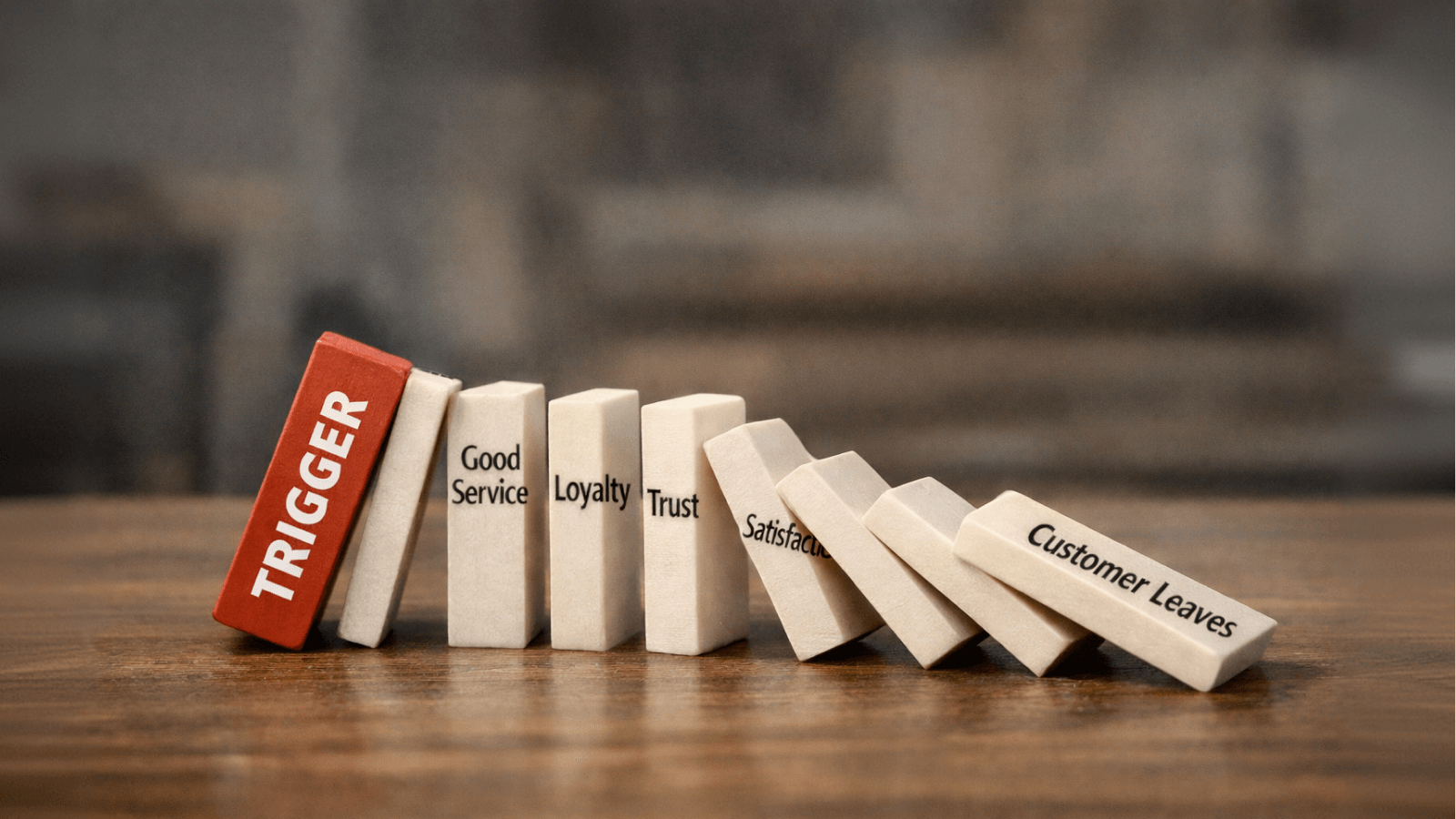
The dominant assumption in retail CX is that customer loss is a satisfaction problem. Scores drop, customers leave. Fix the scores, fix the churn. This model drives billions in survey investment, NPS programs, and service training every year.
The behavioral data tells a different story. Across 22 months and five major QSR brands in the GCC market, tracked through ATLAS², the pattern is consistent: customers leave not because their satisfaction eroded, but because a specific cognitive trigger activated and the brand was not positioned to respond.
Triggers are not complaints. They are behavioral moments. Boredom. A price prompt. A social occasion. A craving shift. Each fires at a predictable rate, at predictable times of day, with a measurable window between trigger and switch. The brands that understand this operate on a fundamentally different timeline than those that don’t.
Across every brand in the dataset, adoption grew at two to three times the rate of trust over 22 months. More customers are trying these brands. Fewer of them are becoming loyal to them. That gap is the structural opportunity most retail CX programs are not addressing.
Rising adoption measures reach. Rising trust measures relationship. You can grow one without the other. But only one of them predicts lifetime value.
The signal here is structural. When adoption grows faster than trust, it means customers are arriving faster than experiences can anchor them. The CX investment that compounds is trust-building at the moments that matter after the first visit.
Behavioral tracking identified six distinct cognitive trigger types responsible for all observed brand-switching behavior. They vary in frequency, in how well brands capture the switching customer, and in how much warning time exists to intervene.
The most important column is the warning window. Three triggers fire and complete with zero days between trigger and switch. For those, intervention requires the brand to already be present in the moment, not responding after the fact.
The takeaway from the capture rates is precise. Convenience disruptions and price sensitivity show the lowest retention capture. These are infrastructure problems, not brand problems. Convenience disruptions and price sensitivity point to access and value infrastructure. The behavioral data shows where they are concentrated, which tells you exactly where to focus.
Trigger behavior concentrates at specific times of day. The data shows that lunch and evening windows dominate for variety-seeking and social influence, while late-night skews heavily toward craving-driven switching. Understanding when each trigger fires is what makes pre-emptive CX possible.
| Time Period | Variety | Price | Social | Service | Craving | Convenience |
|---|
When a customer switches internally, moving from one brand within the portfolio to another, 91% of them are retained. When a customer switches externally to a competitor, only 12% return within 21 days. That difference has a name: portfolio gravity. And its lifetime value implication is 7.6 times.
Lifetime value multiplier for customers retained within the portfolio versus those who switch to a competitor. Keeping a switching customer inside your brand ecosystem is the single highest-return retention action available.
Current portfolio gravity sits at 43%. Industry average is zero, since most brands operate as single-brand entities. The behavioral ceiling, based on current portfolio composition and trigger capture rates, is 68%. That 25-point gap between current and potential is the measurable commercial opportunity in this dataset.
Six behavioral signals predict switching with measurable accuracy days before the event. Each has a different lead time and a different intervention window. The highest-accuracy signal, competitor app install at 89%, arrives just three days before the switch. Order frequency decline, with 81% accuracy, arrives 14 days out.
Support contact is flagged as Critical because the switch is occurring in the same moment as the contact. Resolution in real time is the only option. Every other signal on the list provides a runway before that moment arrives. Order frequency decline at 14 days with 81% accuracy is the most actionable signal in the dataset, because it arrives early enough to intervene with a targeted offer, portfolio message, or re-engagement sequence before the decision crystallizes.
Every finding in this analysis came from public data intelligence. No CRM connection. No data warehouse. No IT project. No data sharing agreement. ATLAS² reads the behavioral signals that already exist in the public record and delivers a complete picture of your brand across 14 vectors within days of engagement.
The modern CMO does not have months to wait for infrastructure to be built. ATLAS² is designed for that reality. You brief us on your brand and category. We run the system. You receive the intelligence.
Try AgenticCX free. Find out which triggers are firing in your market and how wide your intervention windows are.
Try AgenticCX FreeArtificial Leadership in the Era of Limitless Intelligence Leadership without clarity is artificial, no matter how sophisticated the tools behind

The Group Hallucination Problem in Modern Marketing. Human minds do not pass intelligence to each other consistently. So marketing teams

Trust Is Not a Brand Metric. It Is Infrastructure. Three years. Three domains. One pattern. A government falls in ninety

Thoughtful positioning and steady visibility for growing brands.